Why Outdoor-Based Experiences Are Essential to Education Right Now
In a world shaped by screens, artificial intelligence, and constant connectivity, one of the most powerful tools for healthy development remains surprisingly simple: time outside.
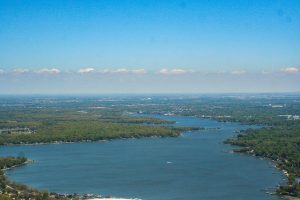
A watershed is an area of land that drains water to a common outlet such as a river, bay, or lake.
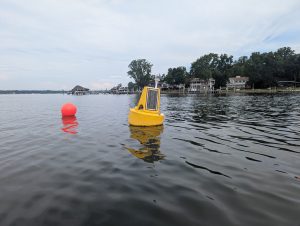
We need Project Clarity because there is too much sediment in our great resource, Lake Macatawa. The European settlers of our community began deforesting the area and draining natural wetlands to build their settlement resulting in a loss of nearly 90% of our historic wetlands. This loss removed the natural filters that slowed or prevented water and sediment from entering the lake, resulting in the dark plume we see today. This current environment then creates an imbalance in the ecological system, suppressing plant growth and presence of fish species and wildlife. The greater Holland/Zeeland community has an opportunity and a responsibility to restore Lake Macatawa to a point of high water quality for the clarity, health and enjoyment of its current and future generations.
The project itself will be implemented over the next five to ten years. It is expected we will see an increase in biodiversity (plants and animals present), and measurable, incremental improvements in water quality during this time as we implement our remediation plans – restoring wetlands, improving best management practices, and increasing water storage capacity throughout the watershed. It is very possible that we may meet the desired water quality goals in the next ten years, and certainly in our lifetimes. It is prudent to remember that the degradation of water quality in the Macatawa Watershed developed over the past several decades, and reversing this trend will take time.
Project Clarity is well underway and is being implemented by area experts in water resources, best management practices, environmental monitoring, wetland restoration, engineering, law, and land acquisition. The highest priority for the rest of the community is two-fold: become engaged in helping to raise the $12 million dollars needed to support this worthy project; and/or volunteer to help with the 10-year Information/Education work plan, designed to help all of us better understand the project and better tell the story of Clarity.

In a world shaped by screens, artificial intelligence, and constant connectivity, one of the most powerful tools for healthy development remains surprisingly simple: time outside.

Being easy to grow is a surface-level benefit of native plants. At a deeper level, planting natives can have a powerful impact on the health of natural ecosystems.

So, maple syrup comes from a tree—how does that work?
< OUR TEAM Kristina Boersma Support Services Director Kristina Boersma serves as Support Services Director at Dragonflies Discovery Preschool, where she helps guide students, families, and staff as they learn
< OUR TEAM Heather Bouwman Support Services Director Heather Bouwman serves as Support Services Director at Little Hawks Discovery Preschool, where she brings decades of professional experience as a master’s-level
< OUR TEAM Kim Burmeister Director of Reimagining Education Kim Burmeister serves as Director of Reimagining Education at ODC Network, where she leads strategic efforts to scale nature-based, place-based learning
Human activity has had a huge impact on Lake Macatawa and its watershed. This has ranged from connecting to Lake Michigan with a permanent channel, draining wetlands, filling in portions of the lake, and building farms and neighborhoods. While these decisions helped create a vibrant community, it’s a reminder that our decisions can have lasting impacts.
People may think that the problem with the lake is due to industrial pollution from historic or current businesses along the lake. In reality, Lake Macatawa has minimal water quality impacts from these businesses. The larger urban impact comes from all of the hard surfaces – think buildings, parking lots, and roads – that limit the ability of water to infiltrate into the ground, rapidly pushing more water into the streams and lake.
Large areas of the Macatawa Watershed are highly productive agricultural areas. However, these fields were often created as the result of draining wetlands and straightening streams into ditches. These hydrologic changes and a legacy of manure application as fertilizer, have led to large quantities of sediment and nutrients winding up in Lake Macatawa.