1. Water use drops when we plant native varieties
In times of intense heat, Holland BPW sees local water usage more than double, from 13-14 million gallons on a normal day to 30 million gallons. How? If a 0.5 acre lawn is irrigated for 9 weeks per summer at only the recommended 1” per week, that’s 117,612 gallons of water used. Native plants can cut down on the need to irrigate. And the effects are magnified on a community scale: The Fillmore Complex in Ottawa County removed turf grass and installed water-conscious native landscaping, saving almost 80 million gallons of water over 15 years.
2. Native plants prevent sediment pollution
According to the EPA, sediment is the leading non-point source of pollution. Sediment is made up of “dirt” particles that have washed into our waterways from bare ground or erosion in construction sites, farm fields, home landscapes, shorelines, and streambanks. It lowers water oxygen levels, degrades habitat, carries chemicals into waterways, and over time can even cause flooding.
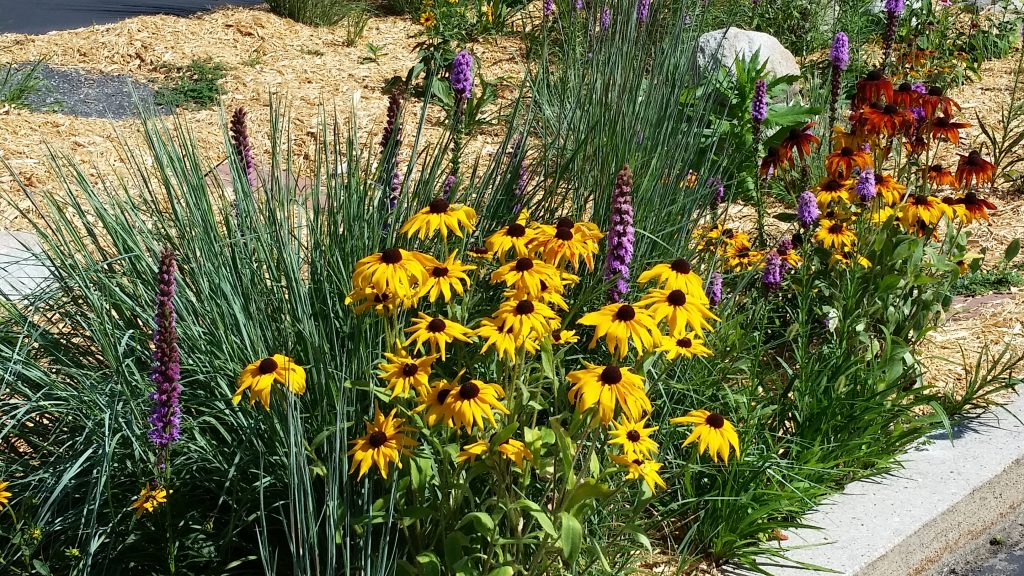
Simply planting native species can combat sediment pollution and increase water quality—especially in lawns that tend to be patchy and unable to sustain thicker turf grass. Even better? ODC installed a handful of curb-cut rain gardens in Holland in the early 2020s. These gardens provide valuable pockets of high-quality habitat and effectively slow and infiltrate stormwater runoff, which, in turn, captures sediment, which our conservation team cleans out in the spring and summer.
In 2025, we saved over 150 pounds of sediment from entering Lake Macatawa, and we’ve already collected over 100 pounds in the 2026 spring cleanup alone. With our larger restoration projects, such as the recently completed restoration of 1,250 feet of streambank in Paw Paw Park, we’ve implemented enough best management practices to keep over 46,000 pounds of sediment out of Lake Macatawa every year.
3. Native plant species increase biodiversity
Native plants and local wildlife have a special, interconnected relationship. They evolved together over thousands of years, which means native plants provide higher-quality food and habitat to local wildlife than non-native species can offer. For many insects and animals, this isn’t just a preference—it’s a matter of survival. The best-known example is the relationship between monarchs and milkweed (Asclepias). Without milkweed, monarchs simply cannot complete their life cycle.
Supporting native insect populations, like the monarchs, is the foundation of many food webs that sustain birds, amphibians, and small mammals. Research shows that on average native plants support 15 times as many native caterpillar species as non-native plants. That difference is staggering when you consider that many bird species require 5,000–10,000 caterpillars just to get their young through the earliest stages of life.
Want to learn more? Fill out the form at the bottom of our Conservation Services page for a free consultation with an expert about how planting natives, installing a rain garden, and other restoration services can benefit your property and our surrounding area.