
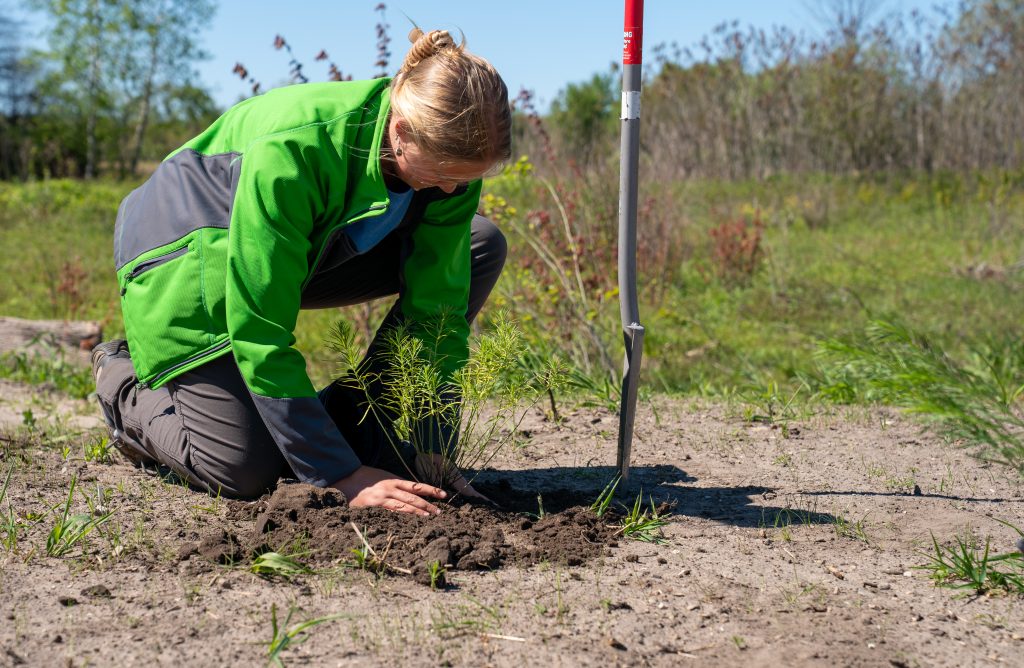
Growing What Others Can't: ODC and Rebel Cultures Are Changing How Restoration Works
There’s a problem quietly limiting conservation work: you can have the land, the expertise, and the will to restore a habitat—and you still might not be able to get the plants you need.
That’s the challenge ODC Network’s Conservation Services team set out to solve when they began a partnership with Rebel Cultures, a West Michigan plant tissue culture lab that specializes in propagating species that are difficult to source through conventional means.
When Seeds Aren't Enough
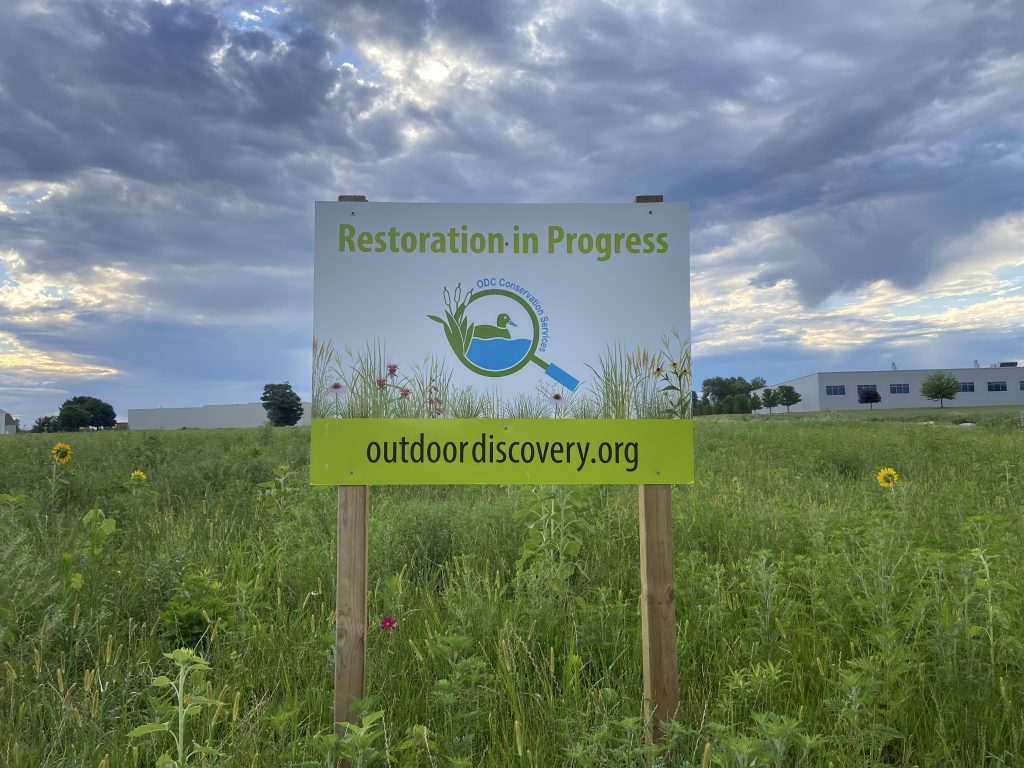
ODC’s Conservation Services team has been restoring natural areas in West Michigan since 2012, managing nearly 2,500 acres of land within ODC-owned preserves and for private clients, municipalities, and landowners. The work spans prairie restoration, forest management, shoreline stabilization, invasive species removal, and wetland creation.
But effective restoration depends on having the right plants. Different plants support different insects, birds, and soil systems, and restoring ecological complexity means restoring the specific species that once belonged there. When those species are rare, not producing seed, hard to propagate, or simply unavailable from suppliers, restoration work can hit a wall.
That’s what happened with Eryngium yuccifolium, commonly known as Rattlesnake Master—a prairie species that has become locally rare in Michigan due to extensive habitat loss and fragmentation. Rattlesnake Master supports specialized pollinators, serves as a host plant for the Eryngium stem borer moth, and contributes structural diversity to grassland habitats. Rather than focusing solely on conventional seed production, ODC began exploring additional tools for establishing species like Rattlesnake Master more reliably and efficiently in restoration settings.
A New Tool for an Old Problem
Cuttings from greenhouse plants at ODC were collected, cleaned, and brought to Rebel Cultures’ lab, where the team propagated them using tissue culture—a laboratory process that can reliably produce many viable young plants from a small shoot of each parent plant. Rebel Cultures describes their approach as biodiversity-conscious propagation, using methods published by the Center for Plant Conservation and the Bureau of Land Management to protect genetic diversity while scaling production.
The result: in May 2026, the first tissue culture Rattlesnake Master plants from this collaboration were planted in the ground at ODC preserve land. It’s a milestone nearly two years in the making.
“What’s really exciting about this work is the opportunity to adapt our restoration methods to match the scale of habitat loss,” says Conservation Services Director Tanner Bricker. “It’s not about replacing traditional restoration methods. It’s about expanding our available toolkit. Partnering with Rebel Cultures helps us better understand what techniques may support locally rare species over the long term and allows us to react more quickly in the future as habitat loss and fragmentation continue.”
Looking Further Down the Road
The Rattlesnake Master project is the foundation for something larger. ODC and Rebel Cultures are now working together on restoration efforts at two ODC preserves in Allegan County—Rabbit River Preserve and River Junction Preserve—with the longer-term goal of establishing a connected corridor of the region’s native oak savanna habitat.
Central to that work is Wild Lupine (Lupinus perennis), the sole larval host plant for the federally endangered Karner Blue Butterfly. While lupine is commercially available and commonly grown from seed, field restoration success can vary depending on genetics, propagation methods, and site conditions. ODC and Rebel Cultures are interested in exploring whether tissue culture and related techniques may offer additional tools for scaling large-scale restoration projects and long-term outcomes.
This is exactly the kind of work ODC’s mission points toward: Protecting natural ecosystems by building the tools and partnerships necessary to restore what’s been lost, and doing it in a way that lasts.
Related Posts
Accessible Adventure: A Nature Program Built for Every Explorer
A Fallen Tree from ODC Gets a New Life at ArtPrize
This Annual, Non-Native Flower Kicks Off Our Restoration Process. Here’s Why.
How We’re Tracking Lake Macatawa’s Water Quality in Real Time
How We’re Restoring Lake Macatawa—and Protecting Its Future
