
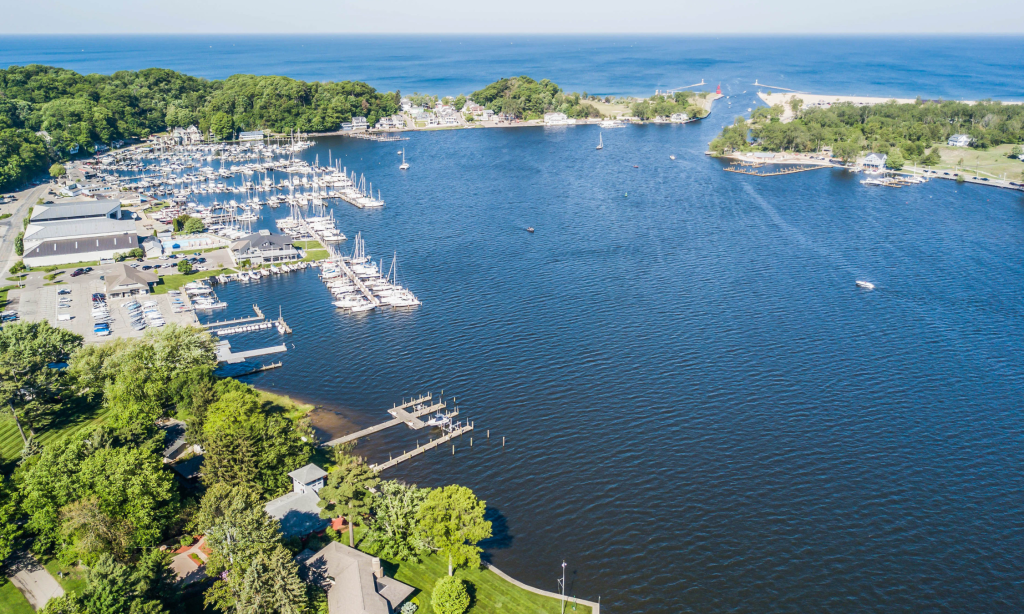
What Is a Watershed—and Why Should You Care About Ours?
Everyone living in the greater Holland or Zeeland area lives in the same watershed. What does that mean? Everything you do on your property—how you water your lawn, what you plant, how water drains from your driveway—has a direct connection to the health of Lake Macatawa.
The Macatawa Watershed: What to Know
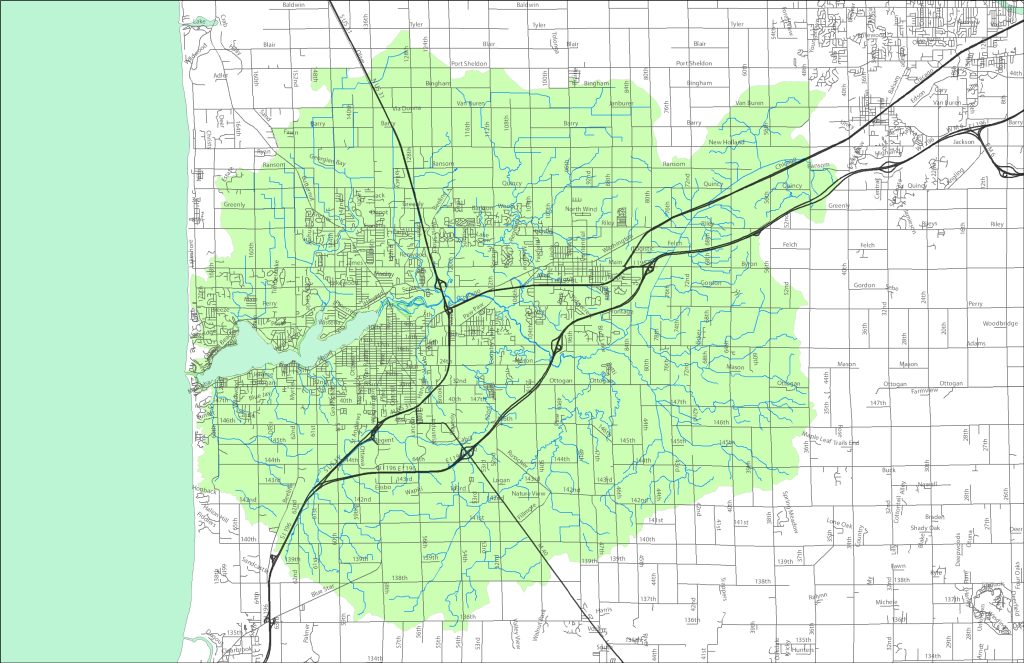
A watershed is an area of land that drains water to a common outlet—a river, a bay, or a lake. Think of it like a giant funnel: rain and snowmelt that fall anywhere within the boundary of a watershed will eventually flow downhill toward the same body of water.
The Macatawa Watershed covers 175 square miles of the greater Holland and Zeeland area. It includes hundreds of miles of rivers, creeks, drains, and ditches, all feeding into the Macatawa River and ultimately Lake Macatawa before reaching Lake Michigan.
Historical development in this area brought widespread land clearing, wetland drainage, and straightened waterways—resulting in nearly 90% of the area’s historic wetlands and forestland being lost. Those wetlands acted as natural sponges that slowed runoff and filtered water before it reached the lake. Once they were gone, sediment, nutrients, and other pollutants began flowing more freely into the watershed’s streams and tributaries. The lake was unbalanced, unhealthy, and unappealing to both local residents and tourists.
Why Should You Care for the Watershed?
This watershed touches nearly every part of what makes West Michigan a place worth living. Lake Macatawa and its upstream waters are the heart of local recreation—and the quality of that experience depends directly on water quality.
Beyond recreational enjoyment, a flourishing watershed supports a community’s overall health and success. If water quality declines, it creates conditions that aren’t physically safe for people, cause the deaths of fish, birds, and other local species, and weaken the overall ecosystem, making it easier for invasive species to gain a stronger foothold. This negatively impacts tourism, industry, and property values. Our local waters truly impact every part of our lives.
The stakes extend beyond our backyard, too. Water flowing through the Macatawa Watershed eventually reaches Lake Michigan, part of a Great Lakes system that holds over 20% of the world’s surface freshwater and supplies drinking water to more than 40 million people. What we protect here is part of something irreplaceable—and preserving it is, in a real sense, preserving a global resource.
How ODC is Leading Efforts to Protect the Watershed
Since 2013, ODC Network has led a community-wide effort that has protected 290 acres of critical land, stabilized 3 miles of streams and waterways, and treated more than 200 acres for invasive species. We’ve partnered with 65 farms to implement agricultural conservation practices across 36,000 acres, and managed more than 1 million gallons of stormwater using rain gardens and bioswales.
We’ve also installed water quality monitoring equipment at 5 stream locations and educated more than 10,000 community members on watershed health. The results speak for themselves: more than 46,000 tons of sediment and 40,000 pounds of phosphorus are now kept out of Lake Macatawa every year, and in-lake phosphorus levels have dropped more than 60% over the past decade. This is the kind of restored habitat and connected green space that doesn’t happen by accident—it’s the product of sustained, deliberate work.
What You Can Do to Help
Watershed health is a community effort. Here’s how to play a part:
- Plant native species. Deep root systems filter stormwater, prevent erosion, and reduce sediment — while requiring far less water than turf grass.
- Install a rain garden. These capture stormwater runoff and let it soak into the ground, keeping pollutants out of storm drains and the lake. ODC offers free 30-minute site assessments to get started.
- Volunteer your time. Community science monitoring and restoration events offer hands-on ways to contribute throughout the year.
- Support ongoing watershed initiatives. Private donations help fund the science, restoration, and outreach that make lasting water quality improvement possible.
Related Posts
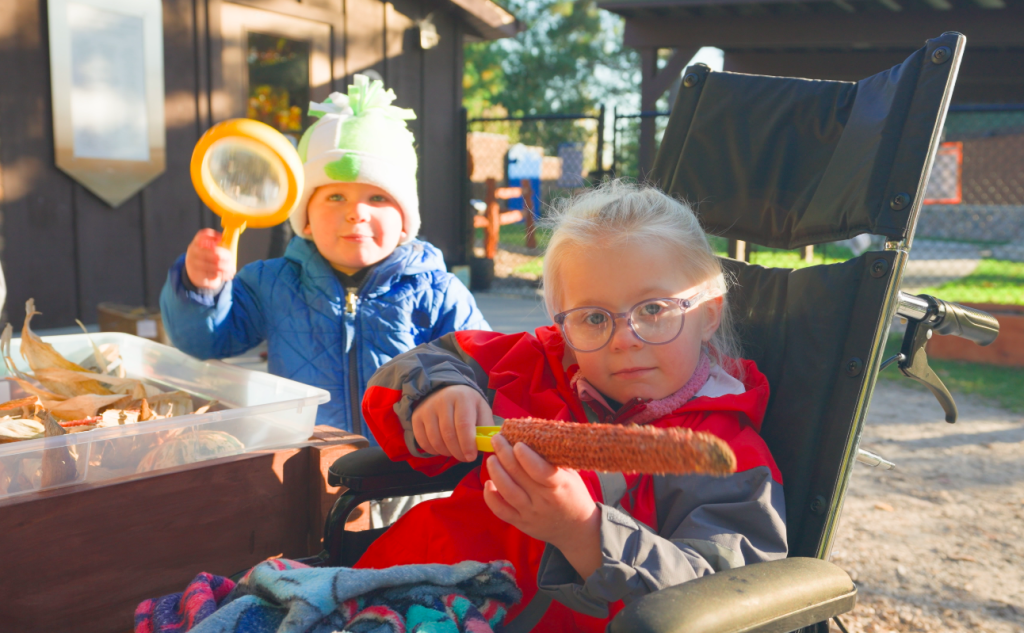
Accessible Adventure: A Nature Program Built for Every Explorer
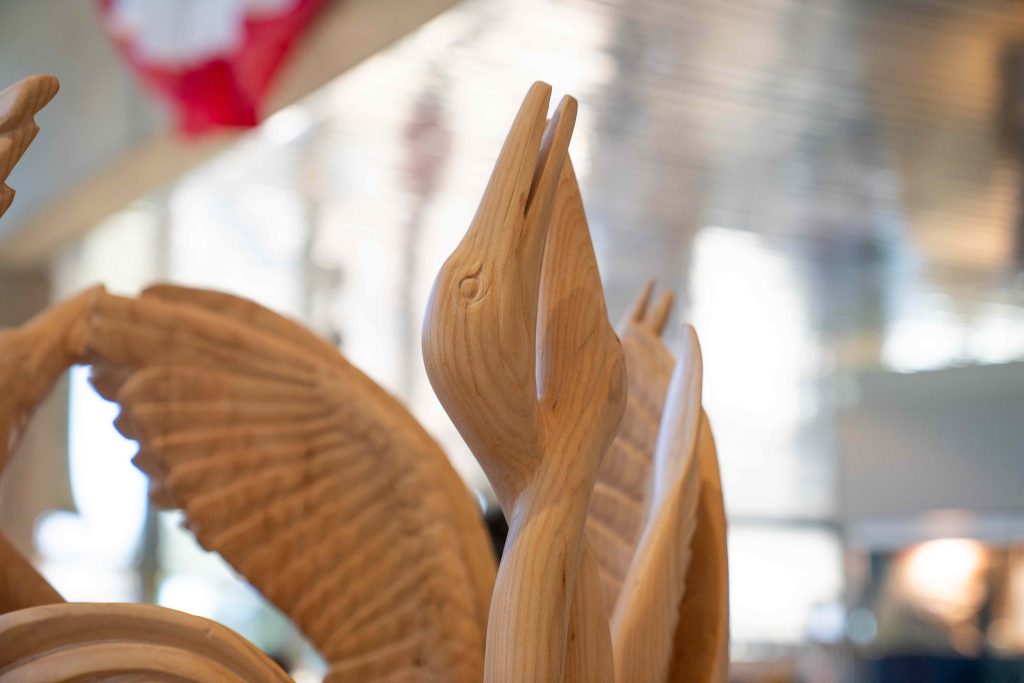
A Fallen Tree from ODC Gets a New Life at ArtPrize
This Annual, Non-Native Flower Kicks Off Our Restoration Process. Here’s Why.
How We’re Tracking Lake Macatawa’s Water Quality in Real Time
How We’re Restoring Lake Macatawa—and Protecting Its Future
