How We’re Tracking Lake Macatawa’s Water Quality in Real Time
For decades, Holland residents have watched Lake Macatawa struggle with algal blooms—a symptom of excess phosphorus and sediment washing into the lake from across the region. In 2013, ODC Network launched Project Clarity to take on that challenge. Through restoration work, agricultural best management practices, and community education, Project Clarity has helped keep an estimated 46,000 tons of sediment and 40,000 pounds of phosphorus out of Lake Macatawa every year.
But improving water quality isn’t a one-time project. It requires understanding what’s happening in the lake, how conditions are changing, and whether the solutions we’re investing in are working.
Introducing ODC Network’s Water Quality Monitoring Buoy
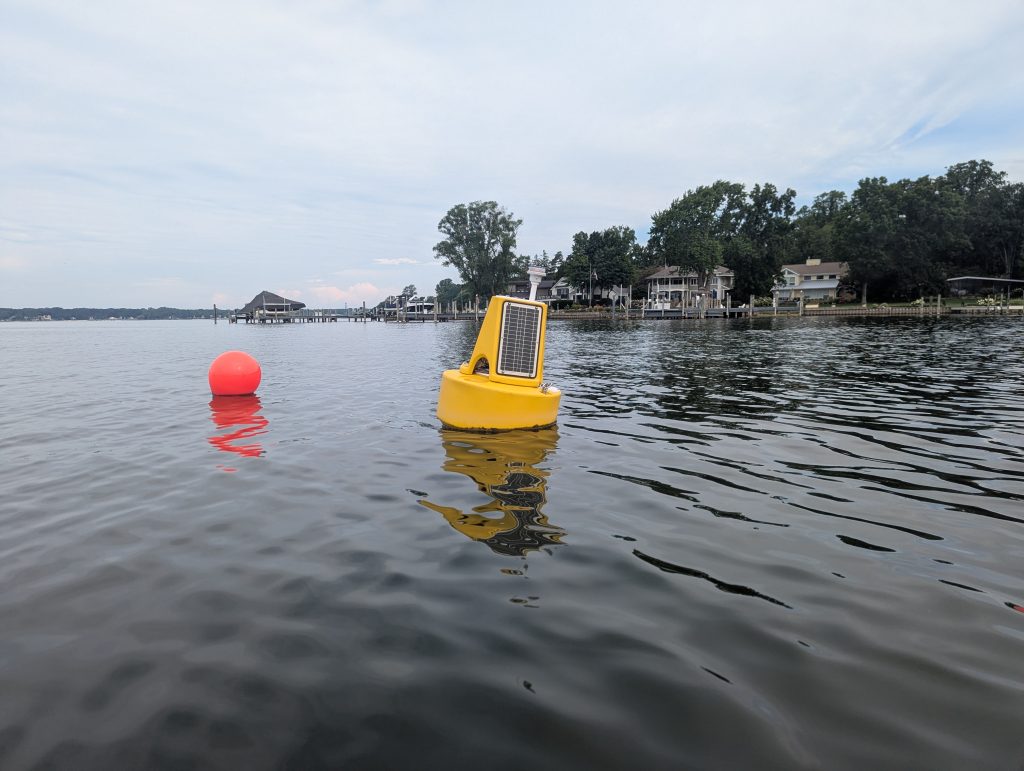
This is where our new buoy comes in. Deployed on Lake Macatawa, the buoy is part of the Ottawa County Water Quality Monitoring Initiative and collects continuous data and shares it in near real time.
Why a Buoy, and Why Now?
Phosphorus remains one of the biggest challenges facing Lake Macatawa. While the buoy doesn’t measure phosphorus directly, it continuously tracks conditions that can help us understand its effects.
It monitors indicators of algae, helping us see when conditions associated with a bloom begin to develop. It also measures turbidity—or how clear or cloudy the water is. Increased turbidity can signal sediment entering the lake through runoff, and that sediment can carry phosphorus with it.
Together, these measurements give us a much more continuous view of what’s happening in Lake Macatawa than periodic sampling alone.
What ODC Network Does With the Data
The real value isn’t simply collecting more data. It’s using that information to make better decisions.
Over time, the buoy will help us understand how Lake Macatawa responds to storms, seasonal changes and other conditions; what happens before and during algal blooms; and how those patterns change as restoration work continues.
That information can help ODC Network and our partners determine where additional work is needed, prioritize projects that can have the greatest impact, and measure whether our efforts are improving the health of the lake.
See the Data Yourself
You don’t have to take our word for it. The buoy’s readings are available to the public in near real time—visit seagull.glos.org and search “Macatawa,” or download the free Seagull Coast app, to explore current lake conditions for yourself.
This buoy is one more tool in a much larger effort. As our water quality efforts move forward, continuous, reliable data will help guide every decision we make—from where to focus restoration work to how we measure success.
Related Posts
How We’re Tracking Lake Macatawa’s Water Quality in Real Time

How We’re Restoring Lake Macatawa—and Protecting Its Future

Plan Your Visit to the Cultural History Center

How ODC Network’s Cultural History Center Brings State Education Standards to Life
Gwénbeshké: Celebrating Indigenous Culture, History, and Community with ODC Network