Wetlands With a Purpose: A Beginner’s Guide to the Macatawa Mitigation Bank
Protecting Lake Macatawa starts with protecting the land around it and the water that feeds into it. At ODC Network, we do that work by restoring wetlands, partnering with local farms, and caring for the streams and open spaces across our watershed. An important piece of the work is the Macatawa Mitigation Bank, which we’ve been managing with partners for more than a decade.
The Basics: What Is a Mitigation Bank?
In short, a mitigation bank is a large, carefully built wetland that makes up for wetlands lost to development somewhere else in our community. It cleans our water, gives wildlife a home, and helps fund the long-term care of the land. Mitigation banking isn’t our invention, either. It’s a system set up and overseen by the State of Michigan and federal agencies, which write the rules, review every bank, and decide how its credits can be used.
How Does It Work?
Wetlands are nature’s sponges. They slow down rain, filter out pollution, and shelter birds, amphibians, and other wildlife. But our watershed has lost nearly 90% of its historic wetlands to farming and development over generations, and that’s a big reason Lake Macatawa has struggled with water quality.
The good news is that state and federal agencies now have a process in place to better protect wetlands. Agencies like Michigan’s Department of Environment, Great Lakes, and Energy and the U.S. Army Corps of Engineers review projects that could affect wetlands before they move forward. When a wetland can’t be avoided, the builder is required to make up for the loss. That makeup work is called mitigation.
That’s where the “bank” comes in. Instead of building a tiny wetland next to each individual project, a developer can buy credits from a mitigation bank, a large wetland that has already been built or restored somewhere else. Think of it like a payback: if you harm a wetland over here, you help pay for a healthier one over there.
Depending on the type of wetland, the state asks for between 1.5 and 3 acres restored for every acre affected. And mitigation also has to happen within the same ecoregion, an area where the plants and animals share a lot in common—so a wetland lost here is replaced here.
Why a Large, Consolidated Space Is Best
You might wonder why we don’t just have every property owner fix their own wetland loss on site. The trouble is that small, scattered fixes rarely work. The Michigan Department of Environment, Great Lakes, and Energy has found that only about 1 in 5 on-site mitigation projects is considered successful. They tend to be too small, poorly maintained, cut off from other habitat, and lightly monitored.
Banks are different. They are usually more than 10 acres, they’re placed where they help the watershed most, and they have to prove they’re working before any credits can be sold. The large amount of acreage supports a healthier ecosystem more than a handful of pockets ever could.
What to Know About Our Bank
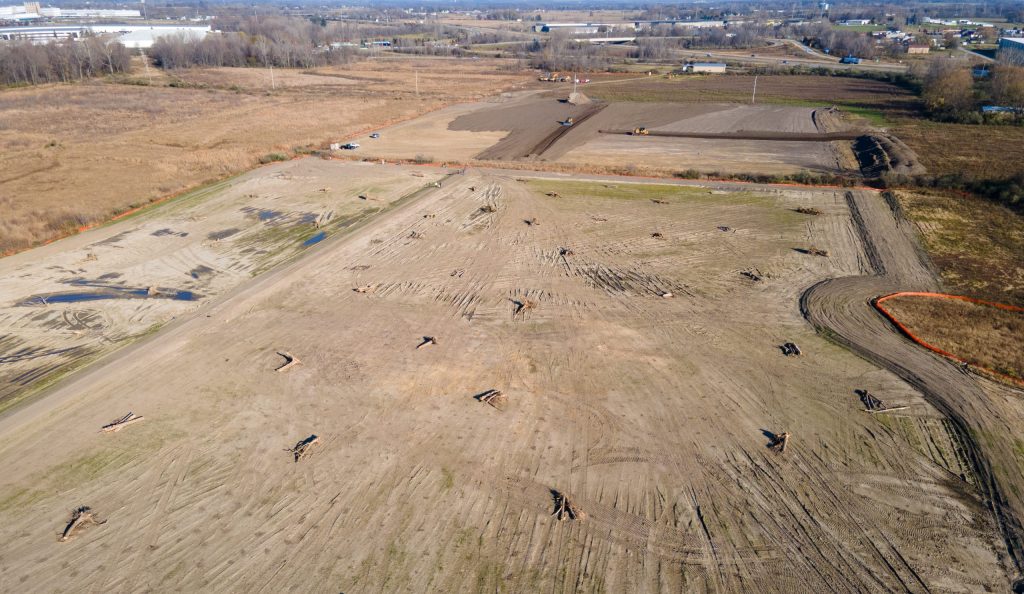
The Macatawa Mitigation Bank started on former farm land that Haworth contributed to ODC Network. These soils were wetlands long ago, which makes them ideal for turning back into wetlands. And we’re building the most valuable type of wetland: a forested wetland, which simply means one with trees. Over time, a wet forest supports more diversity of plant and animal life than a wet meadow does.
The site sits along the Macatawa River, and its location is no accident. Water from the surrounding land flows through the wetland before it reaches the river. The water slows down and settles in the wetland, which limits the sediment that reaches the river, and ultimately Lake Macatawa.
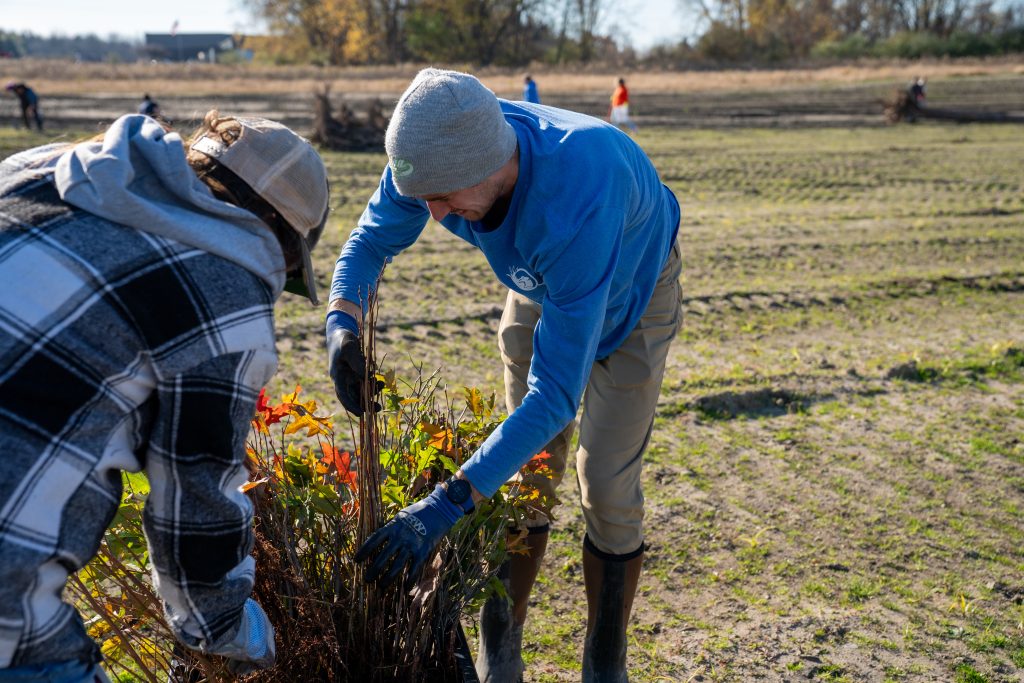
Building a forested wetland takes several steps. Crews excavate the site, seed it with native plants, and add log pile habitat structures, then finish by planting trees. The state sets specific targets: about 120 trees and 6 habitat structures per acre. To meet those numbers even if some trees don’t survive, we plant at roughly triple the required rate, using about 10 species of young bare-root trees.
Credits, Care, and How to Learn More
Who decides who can buy credits? Not us. Michigan’s Department of Environment, Great Lakes, and Energy, the U.S. Army Corps of Engineers, and the U.S. EPA review every request and decide how many credits a project needs. Only after they sign off can a buyer purchase credits from the bank.
Credits aren’t released all at once. They’re released in stages as the wetland proves itself: roughly a quarter once the trees are planted, about half more after a year of healthy water and plant growth, and the remainder once the trees reach 4 to 5 feet and meet the required stem counts.
The money goes straight back into the watershed. Credit sales fund the bank’s ongoing management and help ODC Network invest in more restoration. Once a bank is declared successful, usually within 3 to 5 years of construction, our land management team cares for it permanently. The land is protected by a conservation easement held by the state, which means it stays a natural wetland and can never be developed.
Want to know more? If you’re a landowner or developer who needs wetland credits, contact our Conservation Services team to learn more. And if you’re a homeowner who is inspired by how restored wetlands protect our local water, you don’t need 10 acres to make a difference. From planting native species to installing a residential rain garden, small changes on your own property can help slow runoff and filter water before it reaches Lake Macatawa.
Related Posts
Wetlands With a Purpose: A Beginner’s Guide to the Macatawa Mitigation Bank

We Stopped Trusting Our Instincts. Nature Never Did.
What We Mean When We Say ‘The Future Lives Outdoors’
A Community Effort: Gentex Discovery Preschool Named a 2026 Child Care Champion
4 Easy Ways You Can Protect Water Quality in Lake Macatawa